Termite inspection before auction: what Australian buyers must check
This tool is a generic calculator and does not advertise or promote a specific financial product. It is not intended to be relied on for the purposes of making a decision in relation to a financial product. You should consider obtaining advice from a financial services licensee before making any financial decisions.
Termite inspection before auction: what Australian buyers must check
Yes, arrange an independent pre-purchase timber pest (termite) inspection and get the written report before auction. AS 4349.3 sets minimum requirements for timber pest inspections, and Consumer Affairs Victoria’s checklist advises buyers to arrange and review building and pest reports before auction. Arrange the inspection now, confirm a written report is included, and build your decision around it.
TL;DR:
- AS 4349.3 requires visual, non-invasive checks of accessible buildings, outbuildings, and grounds within 30 metres; reports should document damage, risk conditions, access limits, and recommendations.
- Building reports may miss termite risks, so order a separate pest inspection and review both reports before auction, when bids cannot depend on later checks.
- Mud tubes, frass, hollow timber, blistered paint, or discarded wings warrant closer inspection, but their absence cannot rule out colonies hidden underground or inside walls.
- If the report finds activity or damage, get a licensed treatment quote and repair assessment, then negotiate remediation or a price reduction before settlement.
- A clear report is only a snapshot: inaccessible areas and changing termite activity leave residual risk, so higher risk properties warrant at least annual inspections.
Table of Contents
- What a standard pre-purchase timber pest inspection covers under AS 4349.3
- What to look for yourself at open homes
- Timing, costs and contract implications for private sale and auction
- How to choose a qualified timber pest inspector
- How to read the inspection report and what to do next
- The limits of pre-purchase inspections and how to manage what they cannot see
- Why independent due diligence matters more than vendor-arranged reports
- Where OptiWealth FairBid fits alongside your termite inspection
- FAQ
- Sources
What a standard pre-purchase timber pest inspection covers under AS 4349.3
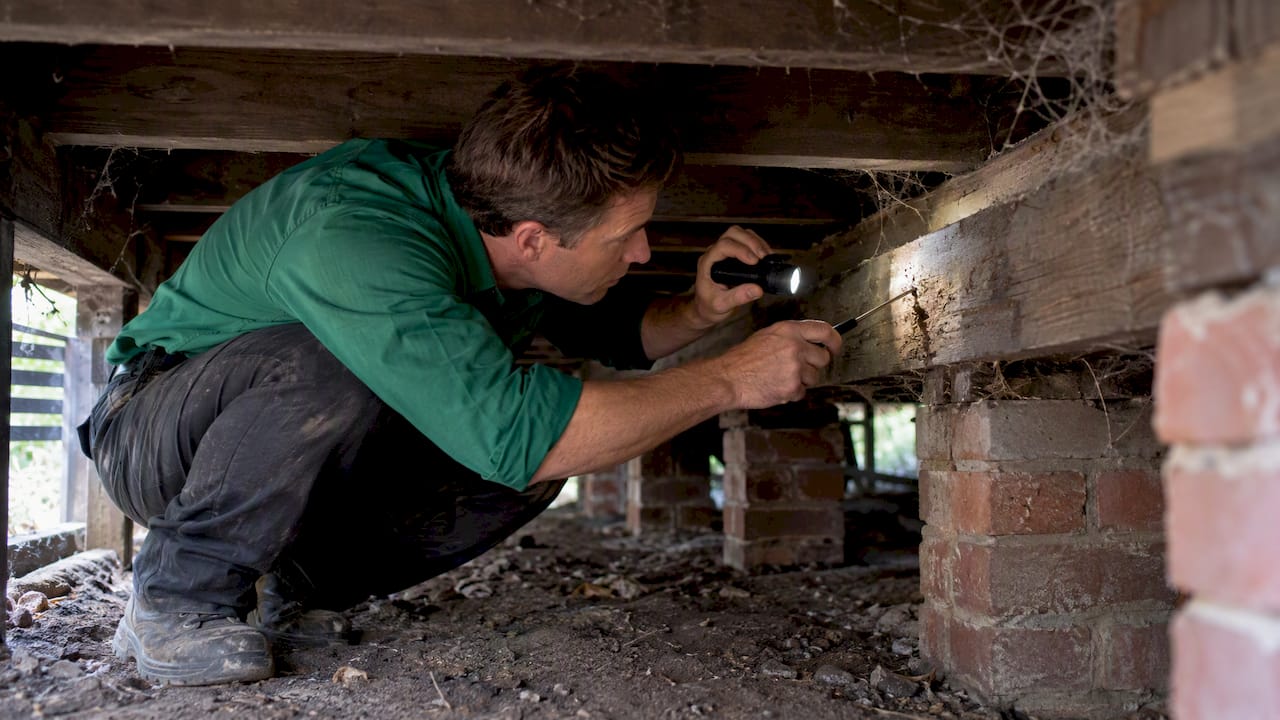
A compliant inspection follows a defined scope, not a loose walk-through. Under AS 4349.3, the standard sets minimum requirements for a visual, non-invasive assessment of accessible building areas, outbuildings and grounds within a 30 metre radius of the main structure. The inspector is looking for subterranean and damp wood termites, borers and wood decay fungi, and the inspection does not involve removing wall linings, lifting floor coverings or probing cavities that are not already exposed.
The written report should provide more than a general impression. The AEPMA Code of Best Practice requires written reports to set out:
- Whether termites were detected or not detected on the day of inspection
- The extent and location of any identified damage
- Conducive conditions that increase future termite risk, such as timber-to-ground contact or poor subfloor ventilation
- Areas the inspector could not access and why
- Recommendations for further investigation, treatment or follow-up inspections
A timber pest inspection is a different exercise from a general building inspection, and conflating the two is a common buyer mistake. A standard building inspection assesses structural soundness, moisture issues and visible defects across the whole property, but it often does not include the detailed termite detection work a dedicated pest inspection performs. The NSW Government’s guidance on pre-purchase inspections notes that a building report alone can miss termite-specific risk, particularly in areas with known termite pressure, so a qualified, insured timber pest specialist should be engaged separately. Commissioning both gives you a broader view of structural and timber pest risks.
What to look for yourself at open homes
You are not expected to diagnose an infestation on an open home walk-through, but a handful of visible signs can tell you whether a property deserves closer scrutiny before you spend money on reports. Consumer Affairs Victoria lists the signs worth training your eye on:
- Mud tubes running up foundation walls, piers or timber stumps
- Frass, the fine sawdust-like droppings termites leave behind
- Blistered or bubbled paintwork on skirting boards, architraves or door frames
- Timber that sounds hollow or papery when tapped
- Sloping or noticeably bouncy floors
- Discarded wings near windowsills or light fittings, often after a swarm
These signs are useful as a first filter, not as proof of absence. Termites build colonies underground and inside wall cavities precisely where a buyer cannot see them, so a clean-looking property at an open home tells you nothing definitive about what is happening behind the plasterboard. A property with no visible signs can still carry active termite activity. Professional inspectors may use tools such as moisture meters, so a clean-looking open home is not a substitute for a professional inspection.
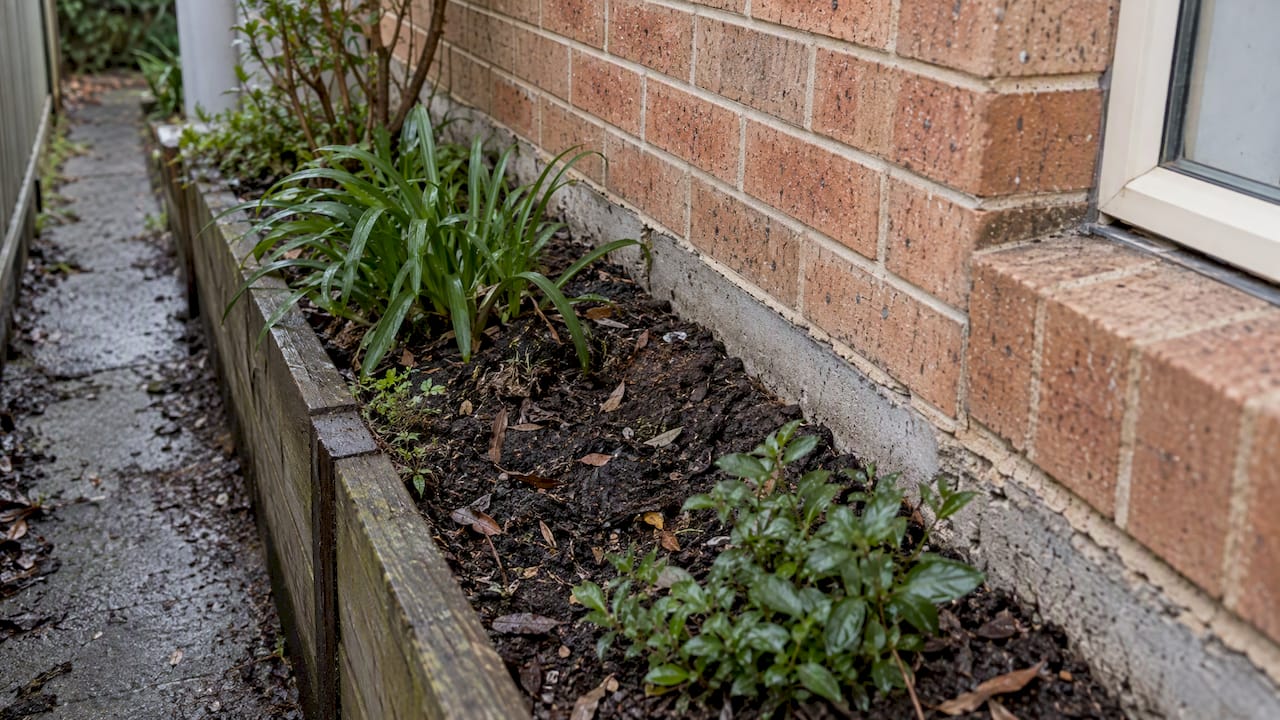
What you can usefully do is note anything that catches your attention, such as timber stacked against external walls, garden beds built up against the slab, or old paint that looks freshly touched up, and flag it to your inspector so they focus there. That short list of observations can sharpen a professional inspection rather than replace it.
Timing, costs and contract implications for private sale and auction
A significant risk is leaving termite inspections until after making an offer. For auction purchases, arrange and review building and pest reports before the auction. Consumer Affairs Victoria’s buying checklist advises buyers to do this, as you usually cannot make a bid subject to an inspection once the auction is underway.
For private sales, you typically have more room to negotiate a cooling-off period or a special condition allowing inspections, but relying on that flexibility is riskier than simply ordering the inspection early. The time needed to arrange and deliver a written inspection report depends on access and the inspector’s availability, so starting early can help avoid a last-minute scramble.
- Book both a building inspection and a timber pest inspection as soon as you shortlist a property
- Confirm in writing that the inspector will deliver a full written report, not a verbal summary
- Share the report with your conveyancer or solicitor before exchanging contracts
- For auction properties, set your maximum bid and your walk-away threshold before the auction date, informed by what the reports show
- Where the contract allows it, request a special condition for remediation or price adjustment if termite damage is found
Pro Tip: Call the agent the moment a property catches your eye and ask when vendor-arranged inspections are being conducted, then arrange your own independent inspection to run in parallel rather than relying solely on a report the vendor commissioned.
How to choose a qualified timber pest inspector
Not every inspector operating in the market is equally rigorous, and the quality of your report depends entirely on who you engage. Check the licensing requirements that apply in your state. In Queensland, inspections should be carried out by QBCC-licensed contractors. Ask directly whether the inspector follows AS 4349.3 and the AEPMA Code of Best Practice, since both set the floor for what a compliant inspection and report must contain.
Before booking, put a short list of questions to the inspector:
- What is the full scope of the inspection, and which areas will be excluded due to access limitations?
- How long will the inspection take on site?
- Will the written report include photographs of any damage or conducive conditions found?
- What professional indemnity insurance do you hold, and for how long after the inspection does it apply?
- Will you identify conducive conditions and recommend a follow-up inspection schedule?
Certain patterns should make you look elsewhere. An inspector who promises a thorough result in a suspiciously short time, who will not commit to a written report, who refuses to list which areas were inaccessible, or who cannot confirm they carry indemnity insurance is not someone you want signing off on the biggest purchase of your year.
How to read the inspection report and what to do next
A termite inspection report is only useful if you know how to act on it. Check what termite activity was detected, along with the extent and location of damage, the inspector’s recommendations and any limitations on what could be assessed, as set out in the AEPMA Code.
- If active termites or damage are identified, get a treatment quote from a licensed pest management professional before you decide anything else.
- Ask a structural tradesperson to scope the extent of repairs where timber damage is significant, since cosmetic patching can hide structural work that still needs doing.
- If treatment is carried out before settlement, arrange a post-treatment re-inspection so you are not relying on the pest controller’s word alone.
- Use the report as a negotiation tool: request that the vendor complete remediation before settlement, negotiate a price reduction that reflects the cost of treatment and repair, or hold funds in escrow until the work is verified.
- For private-sale contracts, ask your conveyancer whether to include a condition requiring a specialist remedial report rather than relying on a verbal assurance.
A report showing no detected activity is good news, but it is not a guarantee the property will stay that way. Conducive conditions noted in the report, like poor drainage or timber in contact with soil, are worth addressing regardless, since they are the reason termites find a property attractive in the first place.
The limits of pre-purchase inspections and how to manage what they cannot see
A pre-purchase timber pest inspection is a snapshot, not a certification. It is visual and non-invasive by design, it depends on what areas the inspector can physically access on the day, and seasonal termite activity means a property inspected in a quiet period can still develop active infestation soon after. Industry submissions on pre-purchase pest inspection models note that termite nests can exist well away from the house itself and that activity can emerge after the inspection date, which is why some insurers cap professional indemnity cover to a short window following the report.
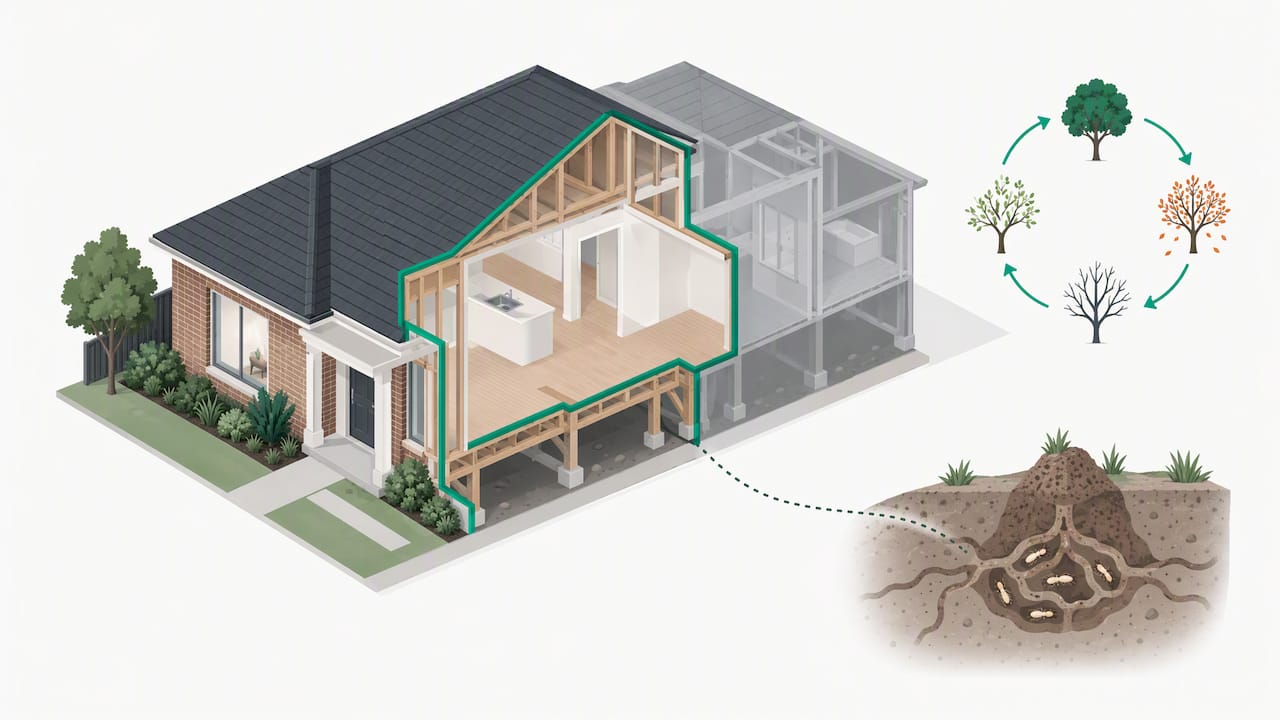
Many professional indemnity policies for pest inspectors only cover a limited period after the inspection date, reflecting how quickly termite conditions can change even in a property assessed as clear. That window is a practical reminder that a clean report today is not a lifetime guarantee.
To manage that residual risk sensibly:
- Ask whether the inspector has conducted a recent follow-up or whether this is a first assessment
- Require the report to explicitly document which areas were inaccessible, rather than silently omitting them
- Set aside a contingency budget for treatment or minor repairs even when the report comes back clear
- For properties in known higher-risk areas, consider an ongoing termite management service contract rather than a one-off check, since the Queensland building guidance says termite management systems require regular inspections and maintenance, with inspections at least annually by QBCC-licensed contractors
Why independent due diligence matters more than vendor-arranged reports
A buyer may prefer to commission an independent inspection. Industry submissions on pest inspection models have raised concerns about vendor-commissioned reports. A buyer-ordered inspection removes that pressure and puts the findings squarely in your corner at the negotiating table.
Termite risk is also only one slice of what can go wrong after settlement. Pairing a timber pest report with a broader audit covering planning overlays, strata risk and other structural or site conditions gives a fuller picture before you commit, rather than discovering gaps one at a time after the keys change hands.
— JeongSuk Lee
Where OptiWealth FairBid fits alongside your termite inspection
A termite report tells you about one category of risk. It does not tell you whether the vendor’s quoted price reflects genuine market value, whether the property sits inside a flood or bushfire overlay, or whether a looming special levy is about to land on the strata budget. OptiWealth FairBid can be considered alongside a timber pest inspection as part of your property research. The service describes audits that cover property risks such as structural defects, council overlays and holding costs.
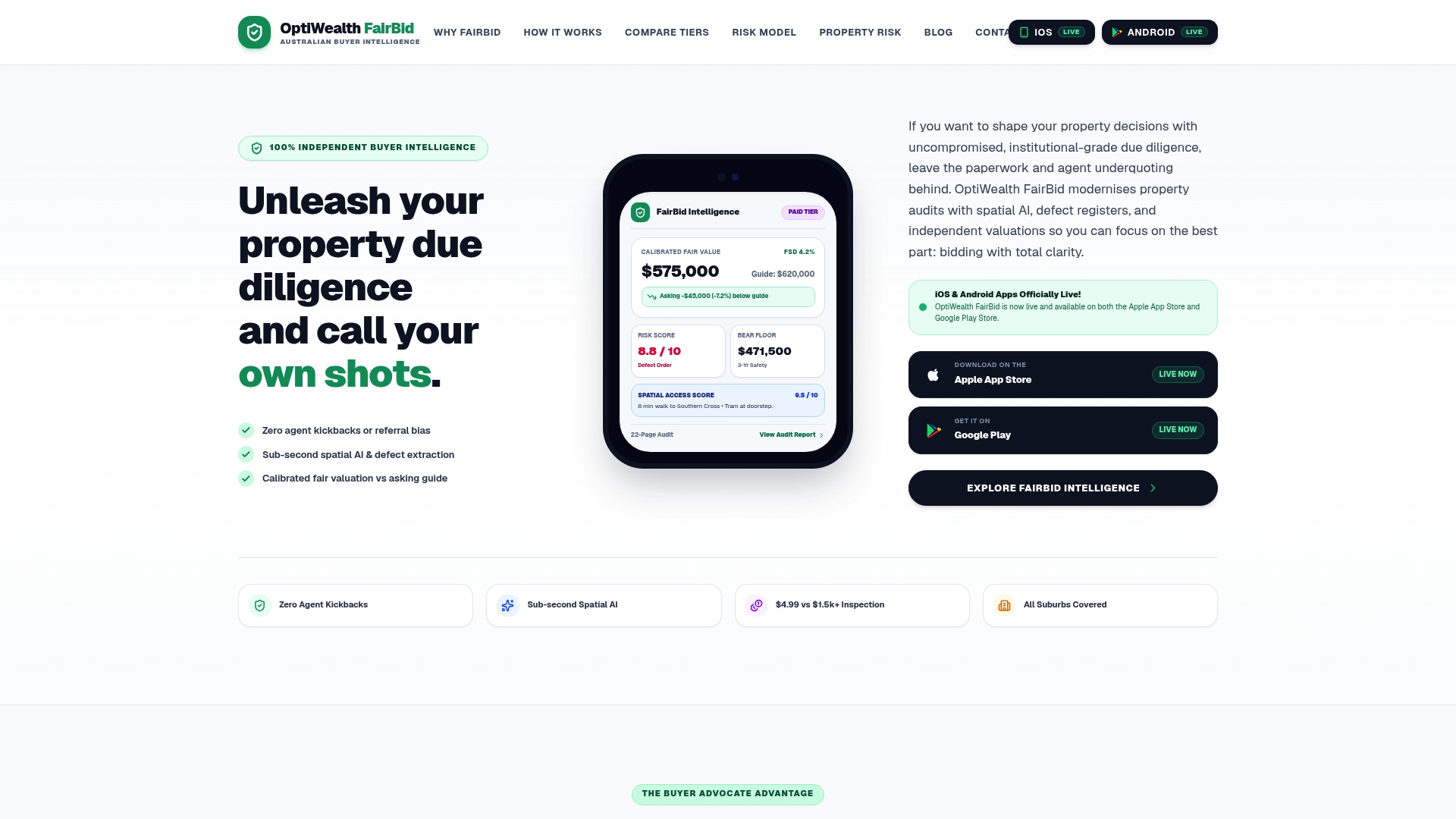
- Run a FairBid audit early, before you negotiate or bid, so its findings sit alongside your timber pest report rather than arriving after you have already committed
- Use the combined picture, pest activity, structural risk, planning overlays and true market value, to set your walk-away price with more confidence
- Check a live example through our property sample to see what a FairBid audit report covers before you buy one
The Free Tier gives you a starting view, and the Paid Advocate Tier unlocks the full audit report at the current price listed on our website, which is a modest cost next to the price of a post-settlement surprise. Start with our home page to see which tier suits the property you are assessing.
FAQ
Which Australian standard governs termite management?
AS 4349.3 sets the minimum requirements for pre-purchase timber pest inspections in Australia, covering visual, non-invasive assessment of accessible areas and grounds within 30 metres of the main building. The AEPMA Code of Best Practice also describes written reporting requirements.
What smell do termites hate the most?
There is no verified, standard list of scents that reliably deter termites, and no government or standards source cited here addresses this claim. Rather than relying on a smell-based deterrent, treat visible signs like mud tubes, frass and blistered paint as your cue to book a professional inspection.
What is a full termite inspection?
A full pre-purchase termite inspection under AS 4349.3 is a visual, non-invasive check of accessible areas of the building, outbuildings and surrounding grounds within a 30 metre radius. It results in a written report covering detection or non-detection of termites, any damage found, conducive conditions, access limitations and recommendations for further action.
Will termites go away on their own?
No. Do not assume termite activity will stop on its own. If you suspect an infestation, seek advice from a pest management professional about treatment and follow-up inspections.
Sources
- Ablis
- AEPMA Code of Best Practice for Termite Management_Final_ACCC
- Pre-purchase inspection reports when buying a home | NSW Government
- Buying property - checklist - Consumer Affairs Victoria
Recommended
- Building inspection checklist: 6 audit checks for Australian buyers
- Avoid settlement shocks: contaminated land checks in Australia from $34
- Home buyers and owners: manage asbestos in homes with a property audit
- $4.99 FairBid Audit: Strata Report Explained for NSW, QLD and VIC Buyers
The information provided in this publication is for educational and general information purposes only and does not constitute financial, investment, taxation, or legal advice under the Corporations Act 2001 (Cth). Property buyers and investors should conduct independent physical, legal, and strata due diligence and seek advice from a licensed financial advisor, solicitor, or conveyancer tailored to their personal objectives before entering into any legally binding contract of sale.
OptiWealth Research
Transparent Data Science & EngineeringData Science, Software Architecture & Mathematical Risk Modeling Group
Authored by OptiWealth’s Quantitative & Data Engineering division. Our team specializes in full-stack software architecture, open-source data science, and spatial econometric property valuation (such as hedonic price regression, environmental zoning overlay synthesis, and cash-flow yield analytics). All underlying algorithms and calculation formulas are fully transparent, open to inspection, and designed purely for financial and property data visualization.
Expose Hidden Property Risks & Liabilities
OptiWealth replaces guessing games with algorithmic diagnostics. Use FairBid to audit council overlays, building defects, and calculate true net property yields.